
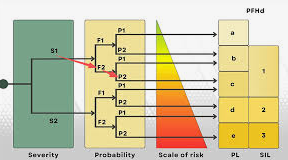
When Is Safety Performance Level Calculation Required?
Machine safety has changed dramatically over the last several decades. The days of relying solely on hard guarding and administrative controls are over. Modern manufacturing increasingly depends on safety-related control systems to reduce risk while maintaining productivity. Light curtains, interlocked guards, safety PLCs, safe torque off circuits, pressure-sensitive mats, laser scanners, and two-hand controls are now common in industrial environments.
But as these systems become more advanced, one critical question emerges:
How do you prove the safety system is reliable enough to protect workers?
That is where Safety Performance Level calculations come into play.
OSHA Compliance Audits Are Not Optional Anymore
Most companies do not fail OSHA compliance because they ignore safety. They fail because they assume they are compliant.
That assumption is where the risk lives.
Across manufacturing, construction, and general industry, the gap between “we have a safety program” and “we are actually compliant” is massive. Regulations evolve. Equipment changes. Employees rotate. Procedures drift. Over time, even strong safety programs degrade into partial compliance without anyone noticing.
Until OSHA shows up.

Top 10 OSHA Requirements That Even Strong Safety Programs Overlook
Most safety professionals can recite OSHA’s top 10 most cited standards from memory. But that list tells you very little about what elite safety programs miss.
The reality is that strong programs usually have the obvious controls in place: machine guarding, fall protection, lockout/tagout, hazard communication. Where they fall short is in the fine print—the clauses buried inside standards that don’t show up in citation rankings but carry real regulatory weight.
These are the requirements that don’t get talked about in toolbox talks, don’t show up in most audits, and don’t get enforced until something goes wrong.
This article breaks down ten of the most overlooked OSHA requirements that matter—and why they should be on your radar.
Electrical Substation Work: OSHA Requirements vs. Industry Best Practices
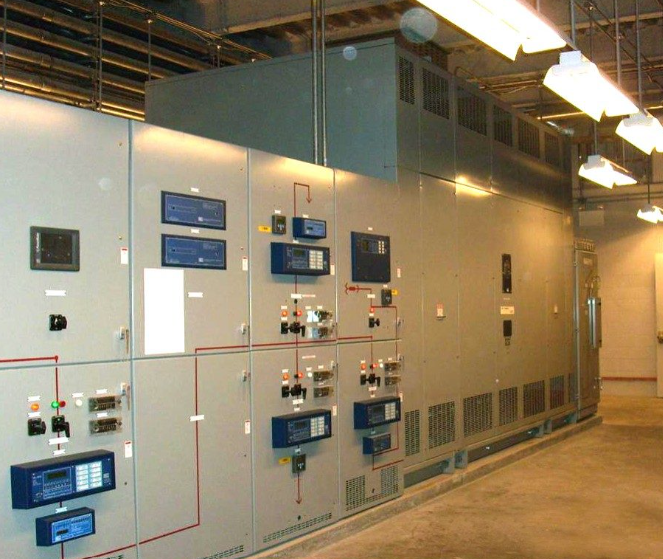
Electrical substations present one of the highest-risk environments in general industry. The hazard profile extends well beyond typical facility electrical work due to high fault current, arc flash energy, induced voltage, and step and touch potential exposure. This article breaks down what is legally required under OSHA versus what is considered best practice under consensus standards such as NFPA 70E, ANSI, IEEE, and ISO. The focus is on training, qualification, voltage classifications, PPE, tools, rescue requirements, risk assessments, and controls.

OSHA Lockout/Tagout Retraining: What “Change” Really Means Under 1910.147(c)(7)(iii)(A)
The retraining trigger in OSHA’s lockout/tagout (LOTO) standard is often misunderstood. Many programs treat retraining as periodic or annual. That is not what the regulation requires. The obligation is event-driven, and the key word driving that obligation is “change.”
Sound Surveys and Noise Exposure: A Strategic Approach to Building an Accurate Hearing Conservation Program
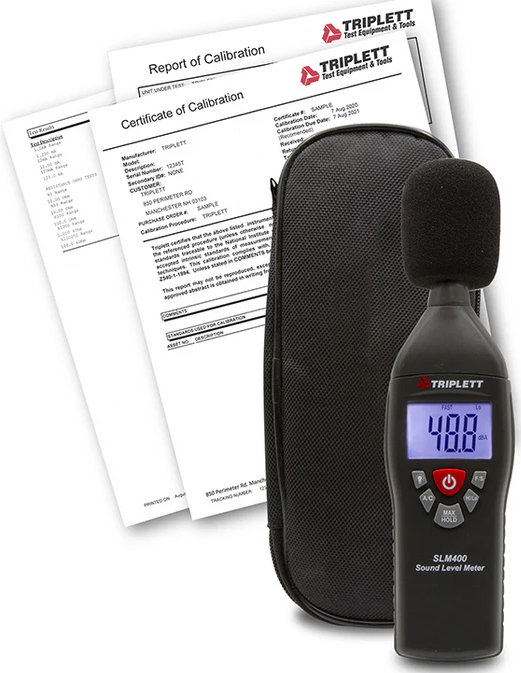
Occupational noise exposure assessment is one of the most misunderstood and inconsistently executed components of an effective safety program. Many organizations default to a single method—either blanket personal dosimetry or broad area surveys—without fully understanding the strengths, limitations, and regulatory intent behind each.
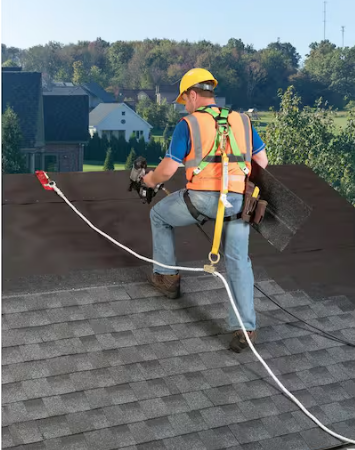
Fall Protection Requirements in Residential Home Construction
Falls remain the leading cause of death in construction. Residential construction, particularly roofing and framing operations, accounts for a significant portion of those incidents. Workers installing trusses, sheathing roofs, or installing shingles frequently work at heights well above six feet, often without permanent structural protection.
Because of this hazard, OSHA requires fall protection during residential construction whenever employees are exposed to falls of six feet or more.
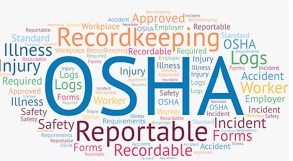
Is This OSHA Recordable? The 13 Injury Situations Safety Managers Get Wrong Most Often
An employee faints at work, falls, and hits their head. The hospital provides stitches.
Is the injury OSHA recordable?
If you have worked in safety long enough, you know experienced professionals can strongly disagree on recordkeeping decisions. OSHA recordkeeping appears straightforward in regulation, yet real workplace situations rarely match textbook examples.
Most recordkeeping errors happen because organizations memorize outcomes instead of understanding OSHA’s decision logic. This article walks through the injury scenarios safety managers debate most often and explains how OSHA expects employers to analyze them.
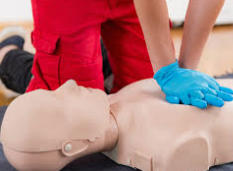
CPR Training Requirements for Work: Who Needs It and What OSHA Actually Requires
If you ask ten people whether CPR training is required at work, you will probably get ten different answers.
Some will say OSHA requires it everywhere. Others will say only healthcare workers need it. Some will argue it depends on your company’s insurance provider or safety program.
The truth is more specific, and once you understand the logic behind OSHA’s rules, the confusion disappears.
This article breaks down when CPR training is required, when it is not, and how employers should decide what level of training is appropriate.

What OSHA Compliance Does and Does Not Protect You From
Many organizations believe that if they comply with OSHA regulations, they are “safe.”
That belief is understandable—and wrong.
OSHA compliance establishes a legal baseline. It defines the minimum requirements employers must meet to avoid regulatory penalties. It does not guarantee that workers are protected from real-world risk, complex tasks, or system failures.

How Management Can Improve Safety Climate: A Practical Guide
Most organizations say safety is a priority. Fewer can demonstrate it consistently through management behavior. This gap is where safety climate lives.
Safety climate is not defined by policies, slogans, or posters. It is defined by what employees observe management actually doing when production pressure, schedule delays, and inconvenient hazards show up. Workers form their perception of safety based on patterns of decisions, not stated intentions

Glove PPE Selection: A Practical, Standards-Based Method for Getting It Right
Hand injuries are often treated as “unavoidable” because cuts, punctures, chemicals, and heat show up everywhere. In reality, most glove failures trace back to one of three problems: the wrong performance rating was chosen, the glove material was incompatible with the chemical or exposure conditions, or the glove was used beyond its real service life. OSHA is explicit that employers must select and require appropriate hand protection when hands are exposed to hazards such as cuts, punctures, chemical burns, and temperature extremes, and that selection must be based on performance characteristics relative to the task, conditions, duration, and hazards identified
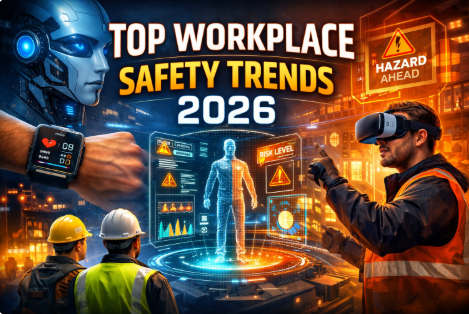
Top New Trends in Workplace Safety for 2026: What Leading Programs Are Adopting Now
Workplace safety in 2026 is shifting from periodic, compliance driven activity to continuously updated risk management. The biggest change is not a single gadget. It is the convergence of sensing, analytics, and workflow automation into systems that identify hazards earlier, prioritize what matters, and verify controls in real time.
Below are the top emerging trends that are gaining traction in 2026, with an emphasis on what has accelerated based on research published in 2025 and newer.
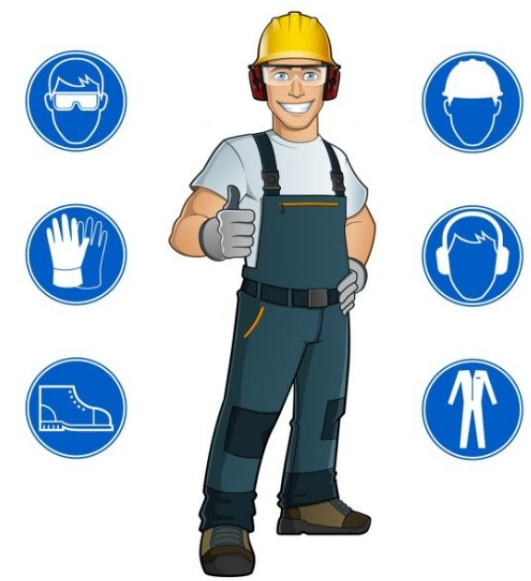
Why Task Based Risk Assessment Is the Foundation of Defensible PPE Decisions
Many organizations still “standardize” PPE by department or job title, then hope that coverage is sufficient. OSHA’s PPE framework pushes employers in a different direction: assess for hazards, then select PPE that protects employees from the hazards identified. In general industry, OSHA explicitly requires the employer to assess the workplace for hazards that necessitate PPE and to select PPE that protects the employee from those hazards.
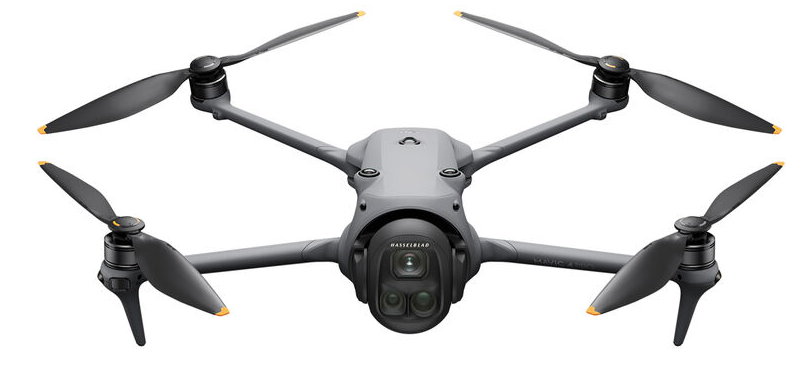
How Drones Reduce Risk and Raise Standards in Workplace Safety
For decades, safety professionals have had to make a frustrating tradeoff: you can get close enough to see hazards clearly, or you can keep people out of harm’s way. Too often, “getting the data” meant putting a competent worker or supervisor in a precarious position. Drones change that equation. When used correctly, unmanned aircraft systems (UAS) let safety teams collect better information, faster, from safer vantage points, while reducing the number of people exposed to high consequence hazards.

Why Your Facility Needs an NFPA 1620 Pre-Incident Plan — And Why the Fire Department Must Help Build It
In the world of industrial safety, few documents carry as much practical weight as a well-executed pre-incident plan (PIP). When seconds matter during a fire, chemical release, or explosion, first responders don’t have time to “figure things out” on scene. That’s exactly why the National Fire Protection Association created NFPA 1620: Standard for Pre-Incident Planning.

Responding to a Potential Natural Gas Leak: Investigation, Monitoring, and Emergency Planning
Natural gas is one of the most common fuels used in manufacturing, food service, and building operations — but it’s also one of the most misunderstood hazards. Even small leaks can pose serious risks if not handled systematically. A strong response and investigation protocol protects people, property, and compliance standing with OSHA and NFPA requirements.

When Lockout Isn’t Feasible: Understanding Alternate Methods of Energy Control
On October 21, 2024, OSHA issued a letter of interpretation titled “Lockout/Tagout (LOTO) Feasibility and ‘Alternative Methods’”.In that letter, OSHA addressed a question concerning when power must remain required for set-ups or change-over tasks (e.g., inching/jogging operations) and whether a true “alternative method” to energy isolation was allowed.

Winter Parking Lot Safety: Why a Flash Freeze Plan Matters as Much as Snow Removal
Most businesses have a snow removal plan — but few have a flash freeze response plan. That gap can be costly. A sudden temperature drop can turn wet pavement into black ice in minutes, creating dangerous conditions for workers, visitors, and vehicles before a plow or salter even arrives.

Why Most Job Hazard Analyses (JHAs) Miss the Mark — and How to Do Them Right
If you’ve ever read a JHA that listed “PPE” as the only control, you already know the issue. Most Job Hazard Analyses fail not because safety professionals don’t care — but because the process itself is misunderstood.