
Find the Safety Answers You Need
Search our growing library of articles covering OSHA compliance, risk management, training, and workplace safety.
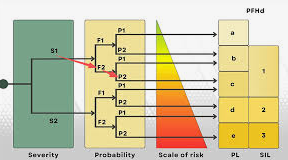
When Is Safety Performance Level Calculation Required?
Machine safety has changed dramatically over the last several decades. The days of relying solely on hard guarding and administrative controls are over. Modern manufacturing increasingly depends on safety-related control systems to reduce risk while maintaining productivity. Light curtains, interlocked guards, safety PLCs, safe torque off circuits, pressure-sensitive mats, laser scanners, and two-hand controls are now common in industrial environments.
But as these systems become more advanced, one critical question emerges:
How do you prove the safety system is reliable enough to protect workers?
That is where Safety Performance Level calculations come into play.

Understanding the Safety Standards: ANSI B56.5 vs. ANSI R15.08 for Mobile Robots and AGVs
As workplaces increasingly adopt automation, understanding the applicable safety standards for mobile robots becomes essential. Two commonly referenced standards—ANSI/ITSDF B56.5-2019 and ANSI/RIA R15.08—are often mentioned in the same breath. While they share common goals, they apply to different technologies and use cases. Here’s a breakdown of the key differences and similarities safety professionals need to know

Safely Interacting with Robots in Teach Mode: Best Practices for Human-Robot Collaboration
As industrial robots become increasingly common in manufacturing and warehouse environments, the need for safe human-robot interaction during programming and maintenance tasks grows more critical. One of the highest-risk situations occurs when robots are placed in teach mode, allowing technicians to guide or program the robot manually. This mode often requires proximity to the robot’s moving parts and can bypass normal safeguarding. Without proper controls and procedures, even a slow-moving robot can cause serious injury or death. Fortunately, standards, technology, and training can help mitigate these risks.
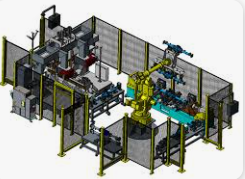
Safety Devices for Robot Cells: Key Components and Their Role in Achieving Performance Levels (PL)
Safety is a critical consideration when designing robot cells, especially as the integration of robotics into industrial processes continues to increase. Ensuring that robot cells are equipped with the right safety devices is essential not only for the protection of human workers but also for compliance with international safety standards. Safety devices such as safety sensors, emergency stop systems, light curtains, and guarding systems work together to ensure that the robot cell operates safely and minimizes the risk of accidents.

Understanding Performance Level (PL) and Its Importance in Safety Systems
In the context of industrial automation, safety is paramount, particularly in environments that involve robots, automated machines, and other high-risk machinery. As automation continues to advance, the risks associated with these technologies are becoming more complex, and so are the safety standards designed to mitigate them. One of the most critical safety concepts is Performance Level (PL), a crucial element in determining the effectiveness of safety devices and systems