
Find the Safety Answers You Need
Search our growing library of articles covering OSHA compliance, risk management, training, and workplace safety.

Why Most Job Hazard Analyses (JHAs) Miss the Mark — and How to Do Them Right
If you’ve ever read a JHA that listed “PPE” as the only control, you already know the issue. Most Job Hazard Analyses fail not because safety professionals don’t care — but because the process itself is misunderstood.

Modern Risk Assessments: Fuzzy Logic
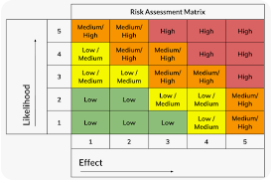
For decades, the traditional 3×3 or 5×5 risk matrix has been the cornerstone of workplace safety assessments. It’s simple, familiar, and easy to print on a clipboard. But simplicity can be a liability. These matrices often reduce complex hazards into rigid “high, medium, low” boxes. They rarely capture multiple overlapping hazards, fast-changing work conditions, or the unpredictable human factors that drive real-world incidents.

How to Conduct Hazard Assessments Before Creating Emergency Action Plans
A well-designed Emergency Action Plan (EAP) begins long before the first page is written. The foundation is a thorough hazard assessment—a structured process to identify, analyze, and control the risks that could lead to an emergency. Below is a step-by-step guide to building a compliant, practical, and continuously improving EAP program.
Workplace Safety Risk Assessment Techniques: A Practical Guide
When it comes to preventing injuries and ensuring compliance, nothing beats a solid workplace risk assessment. Whether you're a safety professional fine-tuning your program or a small business just getting started, knowing how to identify and control hazards is foundational. At Vanguard EHS, we believe risk assessments shouldn't just be a compliance checkbox—they should be a core strategy for protecting your people and your business.
The Limitations of Traditional SFMEA in Risk Assessments
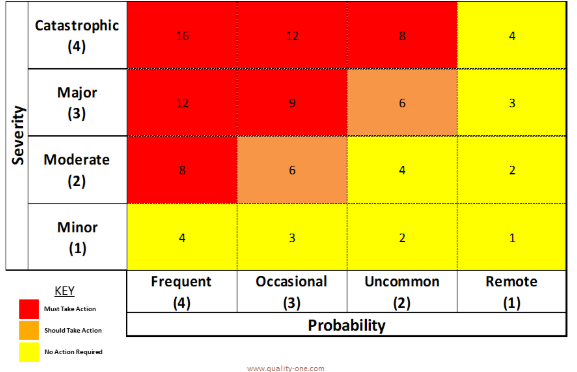
The Safety Failure Modes and Effects Analysis (SFMEA) has long been used in manufacturing and industrial settings to assess risks. This method evaluates risks based on four key factors: severity, controls, frequency, and people. While SFMEA provides a structured approach, it has significant limitations that can result in incomplete or inaccurate risk assessments.