
Find the Safety Answers You Need
Search our growing library of articles covering OSHA compliance, risk management, training, and workplace safety.
OSHA Compliance Audits Are Not Optional Anymore
Most companies do not fail OSHA compliance because they ignore safety. They fail because they assume they are compliant.
That assumption is where the risk lives.
Across manufacturing, construction, and general industry, the gap between “we have a safety program” and “we are actually compliant” is massive. Regulations evolve. Equipment changes. Employees rotate. Procedures drift. Over time, even strong safety programs degrade into partial compliance without anyone noticing.
Until OSHA shows up.

Top 10 OSHA Requirements That Even Strong Safety Programs Overlook
Most safety professionals can recite OSHA’s top 10 most cited standards from memory. But that list tells you very little about what elite safety programs miss.
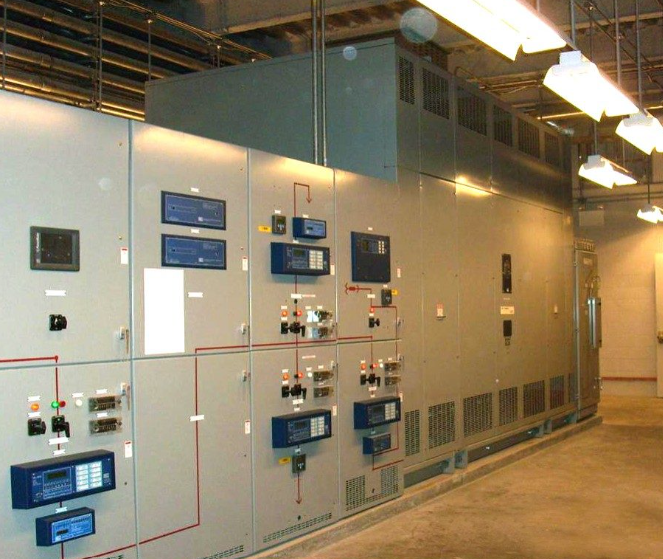
Electrical Substation Work: OSHA Requirements vs. Industry Best Practices
Electrical substations present one of the highest-risk environments in general industry. The hazard profile extends well beyond typical facility electrical work due to high fault current, arc flash energy, induced voltage, and step and touch potential exposure. This article breaks down what is legally required under OSHA versus what is considered best practice under consensus standards such as NFPA 70E, ANSI, IEEE, and ISO. The focus is on training, qualification, voltage classifications, PPE, tools, rescue requirements, risk assessments, and controls.

OSHA Lockout/Tagout Retraining: What “Change” Really Means Under 1910.147(c)(7)(iii)(A)
The retraining trigger in OSHA’s lockout/tagout (LOTO) standard is often misunderstood. Many programs treat retraining as periodic or annual. That is not what the regulation requires. The obligation is event-driven, and the key word driving that obligation is “change.”
Is This OSHA Recordable? The 13 Injury Situations Safety Managers Get Wrong Most Often
An employee faints at work, falls, and hits their head. The hospital provides stitches.
Is the injury OSHA recordable?
If you have worked in safety long enough, you know experienced professionals can strongly disagree on recordkeeping decisions. OSHA recordkeeping appears straightforward in regulation, yet real workplace situations rarely match textbook examples.
Most recordkeeping errors happen because organizations memorize outcomes instead of understanding OSHA’s decision logic. This article walks through the injury scenarios safety managers debate most often and explains how OSHA expects employers to analyze them.

CPR Training Requirements for Work: Who Needs It and What OSHA Actually Requires
If you ask ten people whether CPR training is required at work, you will probably get ten different answers.
Some will say OSHA requires it everywhere. Others will say only healthcare workers need it. Some will argue it depends on your company’s insurance provider or safety program.
The truth is more specific, and once you understand the logic behind OSHA’s rules, the confusion disappears.
This article breaks down when CPR training is required, when it is not, and how employers should decide what level of training is appropriate.
What OSHA Compliance Does and Does Not Protect You From
Many organizations believe that if they comply with OSHA regulations, they are “safe.”
That belief is understandable—and wrong.
OSHA compliance establishes a legal baseline. It defines the minimum requirements employers must meet to avoid regulatory penalties. It does not guarantee that workers are protected from real-world risk, complex tasks, or system failures.

From Compliance to Competitive Advantage: Marketing Your Safety Record
Most organizations treat safety as a regulatory requirement—something to satisfy OSHA and insurance carriers.
Forward-thinking companies know it can be far more: a competitive differentiator that attracts clients, investors, and top talent
OSHA Required Training: What to teach, who needs it, and how often
OSHA training is not a one-size-fits-all program. You train people based on the hazards they actually face, at the moment those hazards become real, and again when something changes or when a standard sets a specific refresher cycle.
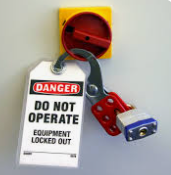
Alternate Methods to Lockout that OSHA May Treat as De Minimis
Lockout remains OSHA’s preferred way to control hazardous energy. That said, OSHA does allow very narrow use of alternate methods in specific situations. When those alternates clearly provide protection equal to or greater than strict, prescriptive compliance, OSHA may classify the deviation as a de minimis condition.
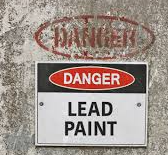
Understanding OSHA’s Lead Standard: Exposure Risks, Testing Methods, and Compliance Requirements
Lead exposure remains a significant occupational hazard across various industries, including construction, manufacturing, and demolition. To mitigate these risks, the Occupational Safety and Health Administration (OSHA) has established comprehensive standards, notably 29 CFR 1910.1025 for general industry and 29 CFR 1926.62 for construction, to regulate and control lead exposure in the workplace.
What OSHA Really Requires in a Fire Prevention Plan—and How to Build One That Works
When it comes to workplace safety, fire is one of the most catastrophic risks. According to OSHA standard 29 CFR 1910.39, any workplace that is required to have a fire prevention plan must meet a specific set of criteria. While the regulation is brief, compliance—and actual effectiveness—requires deliberate planning, documentation, and ongoing attention.

The 5 Safety Policies Every Small Company Needs Before Hiring Workers
Starting a business is exciting—but nothing derails progress like a preventable injury or a surprise OSHA citation. If you're about to hire your first employee (or just did), now is the time to put a few key safety policies in place. You don’t need a full-blown safety manual—just the core essentials that protect your people and show regulators you’re serious about safety.

OSHA Standards vs. NIOSH Recommendations: A Detailed Technical Comparison
While both OSHA and NIOSH aim to protect workers, they take very different approaches when it comes to safety thresholds, methodologies, and scope. Below is a deep dive into how their requirements contrast.
OSHA vs. NIOSH: Understanding Workplace Safety Regulations and Research
Occupational noise-induced hearing loss remains a significant concern in various industries, prompting the Occupational Safety and Health Administration (OSHA) to implement stringent regulations to safeguard workers. One key regulation, 29 CFR 1910.95(g)(1), mandates an audiometric testing program for employees exposed to high noise levels. However, OSHA isn’t the only agency focused on worker safety. The National Institute for Occupational Safety and Health (NIOSH) also plays a vital role in workplace health, albeit through research rather than enforcement.